
Senior Product Designer
Foundational Designer
Visual Identity
Design System
Product UX
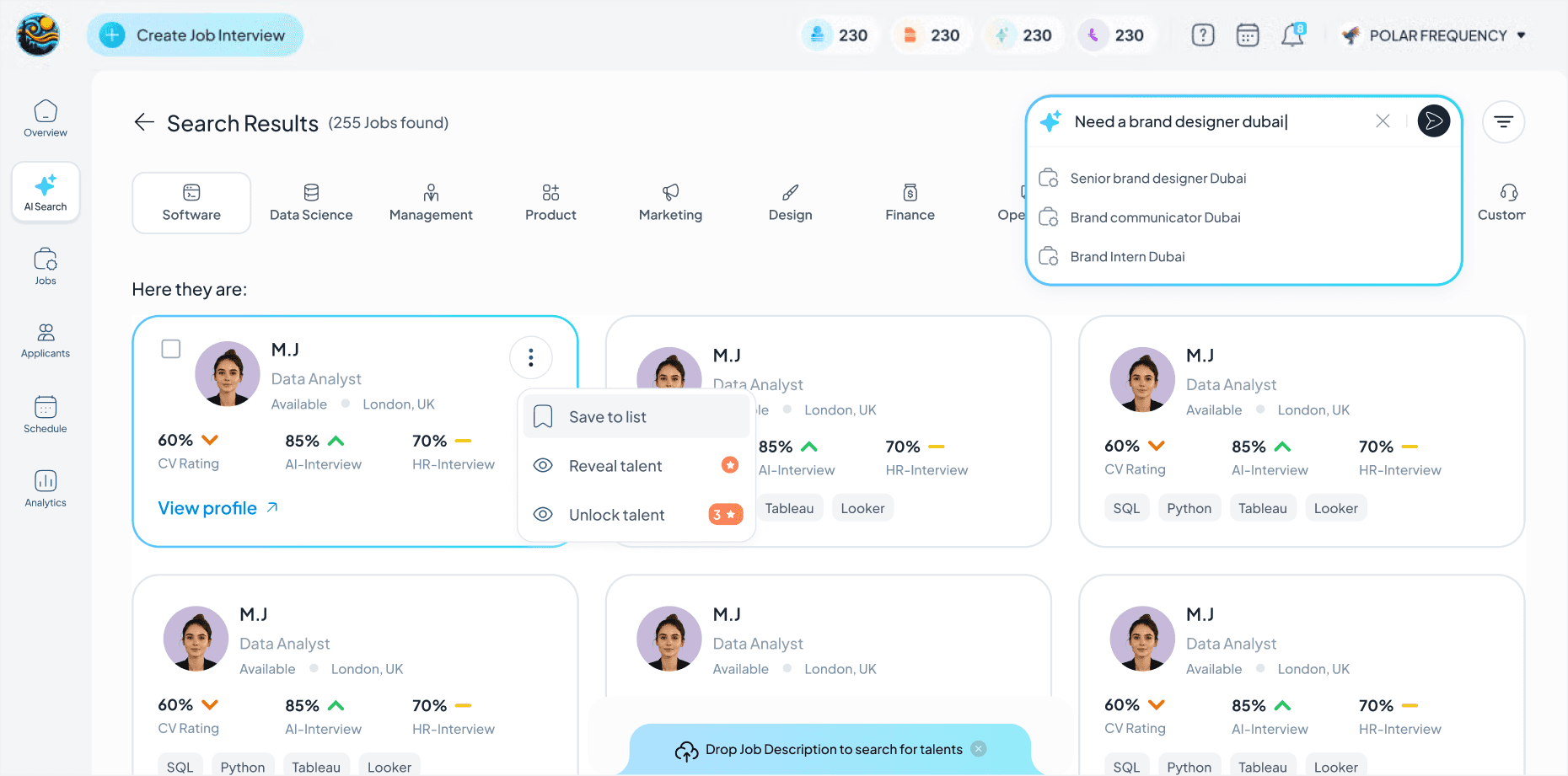
Designing AI hiring platform across recruiter and talent ecosystems
Industry:
Recruitment, AI
Project Status:
Launched product · B2B + B2C platform
Timeline:
2024 - Present
View live product
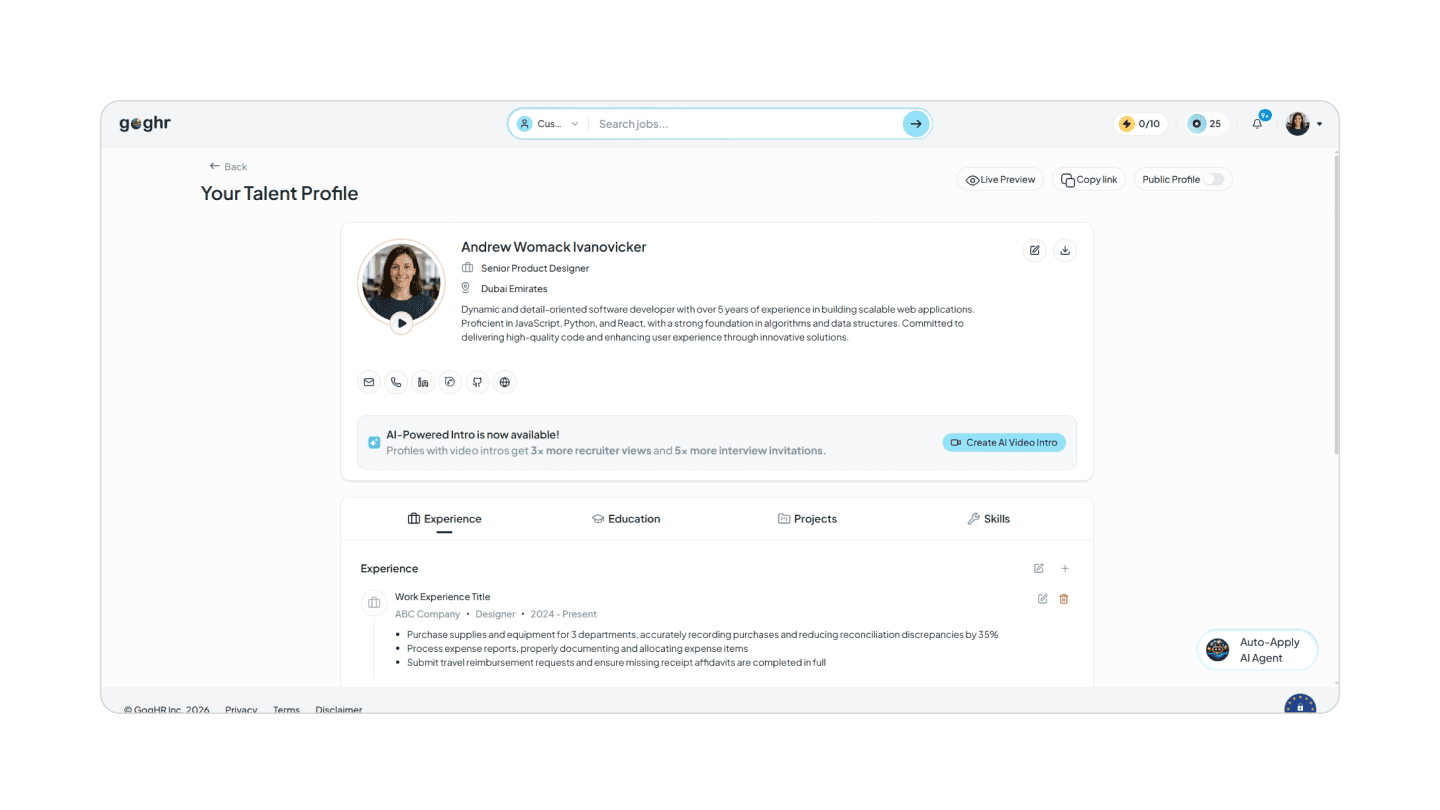
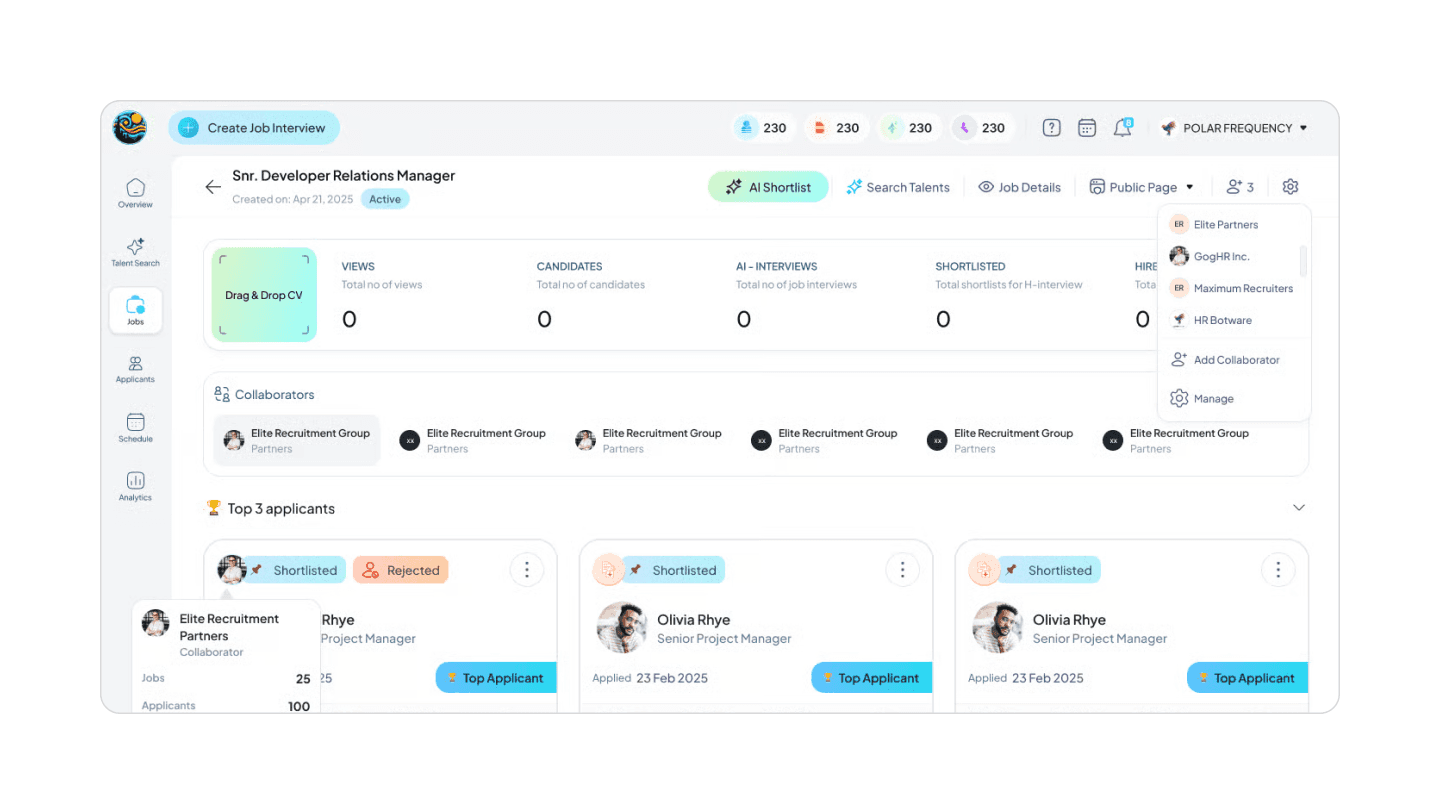
GogHR is an AI-enabled hiring platform for recruiters and talents. As the foundational product designer, I led the visual identity, design system, and core UX from early direction through launch and iteration. My work focused on making AI-assisted hiring more trustworthy through structured candidate summaries, evidence anchors, and production-safe UI patterns that could scale across multiple workflows and user groups.
I designed GogHR as an audit-first AI hiring system, shaping the product, design system, and production-safe workflows that made recruiter and talent experiences scalable, trustworthy, and launch-ready.
My Role
Snr Product Designer
Team
2 core designers + engineers + founding team
Project type
B2B (Recruiter dashboard) & B2C (Talent dashboard)
Stack
Figma Design, React, Figma Sites
Live status
Launched & in marketing phase
Users
900+ recruiters, 20k+ talents
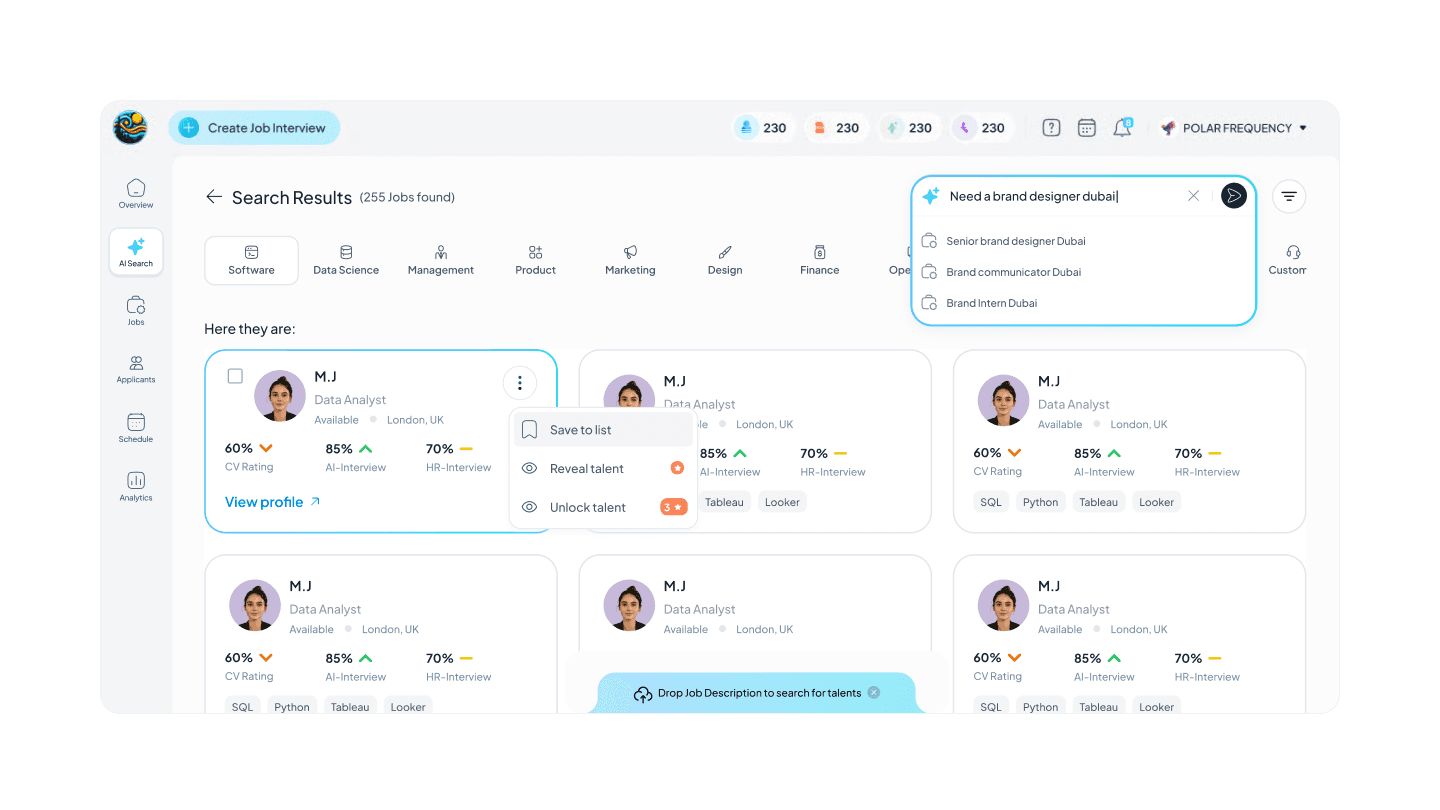
Why it mattered
Recruiters were spending too much time on manual screening and did not have a reliable way to validate AI-assisted recommendations. At the same time, talents lacked structured practice, actionable feedback, and a clear path from discovery to application.
GogHR was built to solve both sides of that problem: a recruiter platform with auditable candidate summaries and workflow tools, and a talent experience designed to improve confidence, engagement, and application quality.
The design challenge was not only to make the experience usable, it was to make AI outputs trustworthy, scalable, and operationally safe.
The product problem
Hiring teams needed a faster way to evaluate candidates without losing confidence in the evidence behind the decision. Talents needed a clearer, more motivating experience that helped them understand their readiness and take the next step.
The platform had to support:
Recruiter efficiency,
Candidate trust,
AI-assisted decision support,
A shared design language across two different user groups.
This required more than UI execution. It required product structure, system thinking, and a design framework that could scale as the platform grew.
My role
As the foundational product designer, I helped shape GogHR from the beginning into an independent but connected solution for recruiters and talents.
I owned:
Visual identity and interface direction
The atomized design system
Core workflow design across recruiter and talent surfaces
Interaction patterns and edge cases
Developer-ready handoff documentation
Post-launch iteration support
I worked closely with founders, engineers, and product stakeholders to turn early ideas into a production product that could launch, stabilize, and scale.
This was a zero-to-one product design role with system-level responsibility.
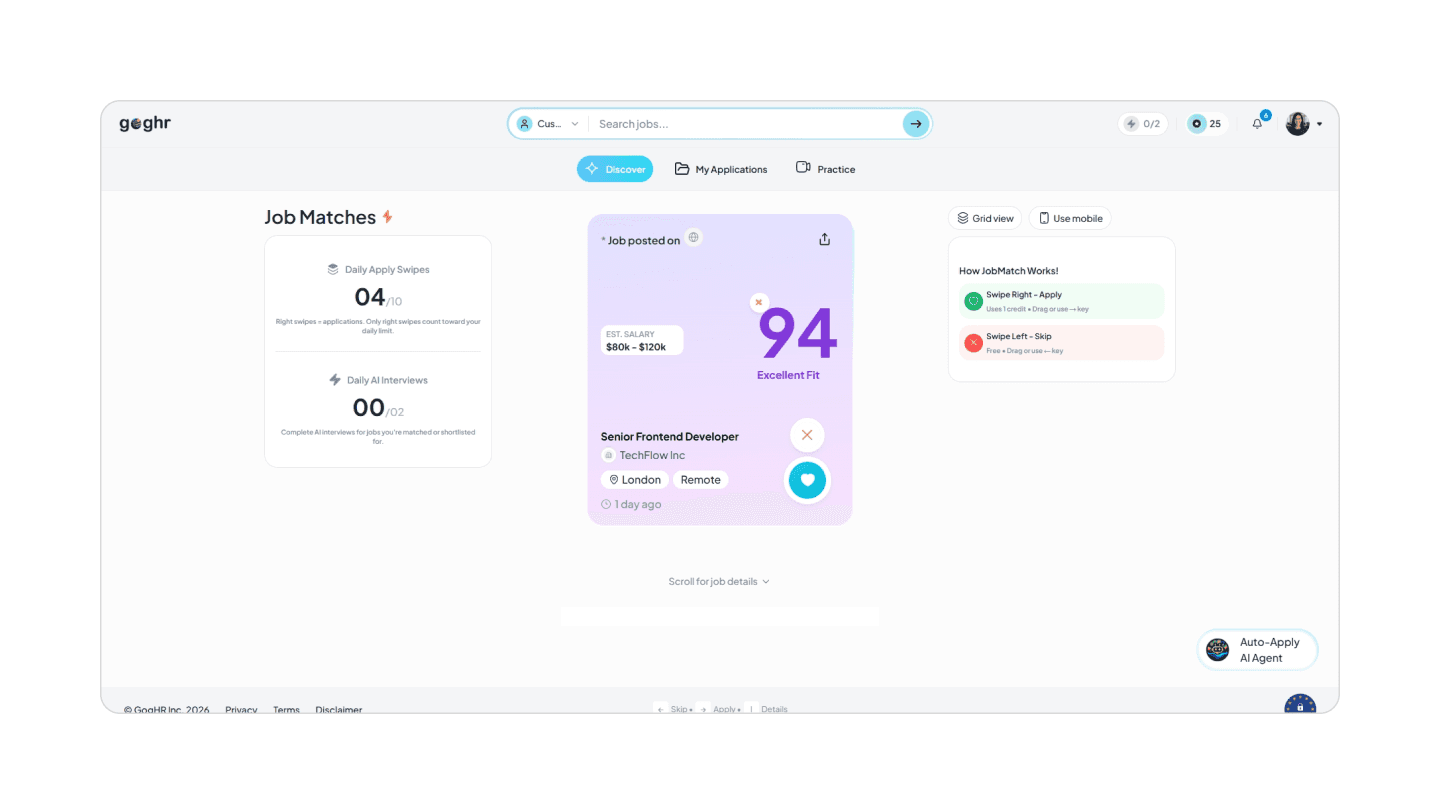
Design principle
In AI hiring, trust should come from verifiable evidence, not opaque scores.
That principle shaped the product in three ways:
candidate summaries were structured around evidence,
AI outputs were presented with traceable context,
the UI was designed to degrade gracefully when data was unavailable.
This made the experience clearer for recruiters and safer for the business.
Key design decisions
Instead of presenting a single black-box “fit” score, I shaped candidate summaries around structured evidence and clear references. This increased trust and reduced the risk of the UI feeling arbitrary.
The recruiter and talent experiences share a design language, but their intent is different. I designed for consistency across the platform while keeping the workflows appropriate to each audience.
For talent-facing flows, the goal was not just engagement. It was meaningful engagement. I balanced exploration with intent signals so the product could support discovery without becoming superficial.
Where AI-derived or backend-dependent data could fail, I defined graceful fallback states instead of letting the interface break silently.
A major part of my contribution was establishing a tokenized, reusable design system that could support the platform as it expanded. This gave the engineering team a reliable foundation and reduced ambiguity during implementation. The system was designed to be repeatable, not just visually consistent — it helped the product scale without reinventing UI logic for every new feature.
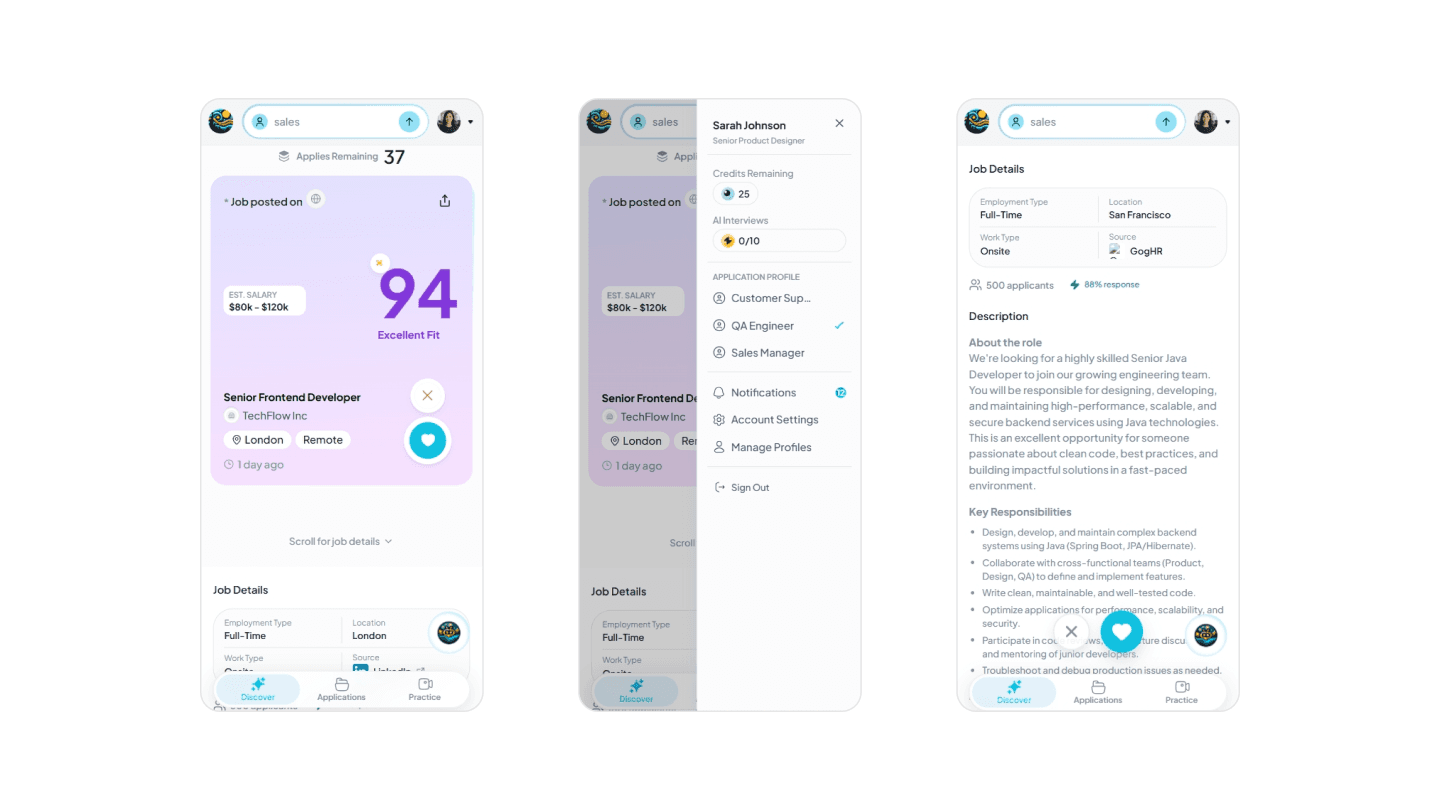
Outcome & impact
GogHR shipped as a live platform serving both recruiter and talent experiences. My work contributed to:
a consistent design language across the product,
a structured candidate-summary model that supported trust and speed,
a production-ready UX foundation for future features,
and better resilience in the face of backend and data issues.
Improvement in recruiter screening efficiency
Reduction in talent drop-off
Recruiters engaged on the platform
What this project taught me about product design at scale
This project reinforced that strong product design is not just about screens. It is about shaping how a system behaves under real use, real constraints, and real risk.
For GogHR, that meant:
designing for two different audiences without fragmenting the product,
creating trust through evidence rather than assumptions,
balancing usability with operational and privacy constraints,
and building a system that engineers could extend without visual or interaction drift.
That is the kind of design work I now look for: work that improves the product, strengthens the system, and survives contact with production.
My takeaway
GogHR was one of the most important projects in my growth as a designer because it forced me to think beyond aesthetics.
I had to think about product structure, system consistency, trust, failure states, implementation reality, and how design choices affect both business outcomes and user confidence.
It was a strong reminder that design at senior level is really about making complex systems easier to trust, easier to use, and easier to scale.
Open to remote global product design roles across AI, platform, and complex workflow products.
Scroll Up